
It’s all rubbish: how to choose the right waste bag
If you have ever been asked to reorder waste bags for your workplace, you will know the question that comes up sooner or later. Which size and which type actually fit which bin? A small office wastebasket, a wheelie bin in the courtyard and a heavy-duty sack in the workshop all need something different in terms of volume, shape and material. If you are not aware of this, it is easy to order bags that are too small or more expensive than they need to be. In this post, Hygolet shares the basics you need to make a sound choice.
Many bins, one building: why size comes first
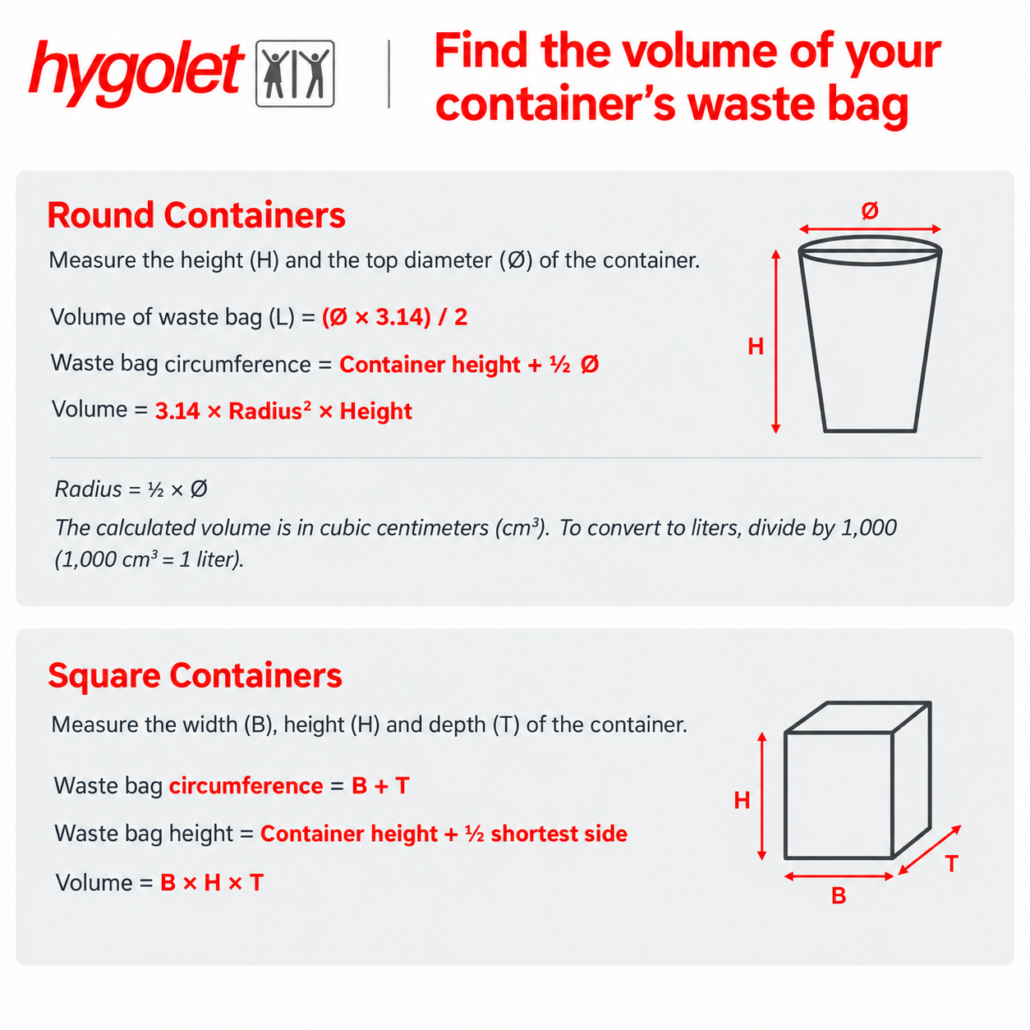
In schools, small wastebaskets in the classroom usually sit alongside larger bins in the
corridors and the canteen. Office buildings combine small bins under the desks with a central collection point on each floor. For a small desk bin, 35 to 60 litres is usually enough. Shared bins in corridors and common areas tend to need 60 to 120 litres. At the collection point in the courtyard or by the loading bay, you will find standard wheelie bins built to EN 840. To work out the right bag size for a bin, first check whether it is round or rectangular. Then use the formulas depicted in the graphic on the left.
Flat, gusseted or star seal: Which bag suits which bin?
Size is only half the story. The type of bag decides whether it fits the bin properly or ends up looking half full. Manufacturers mainly make three types.
Flat bags come straight from the film, with no extra folds. They are soft and flexible and work well in round or narrow bins. You will find these in small offices, in corridors or as a simple wastebasket liner.
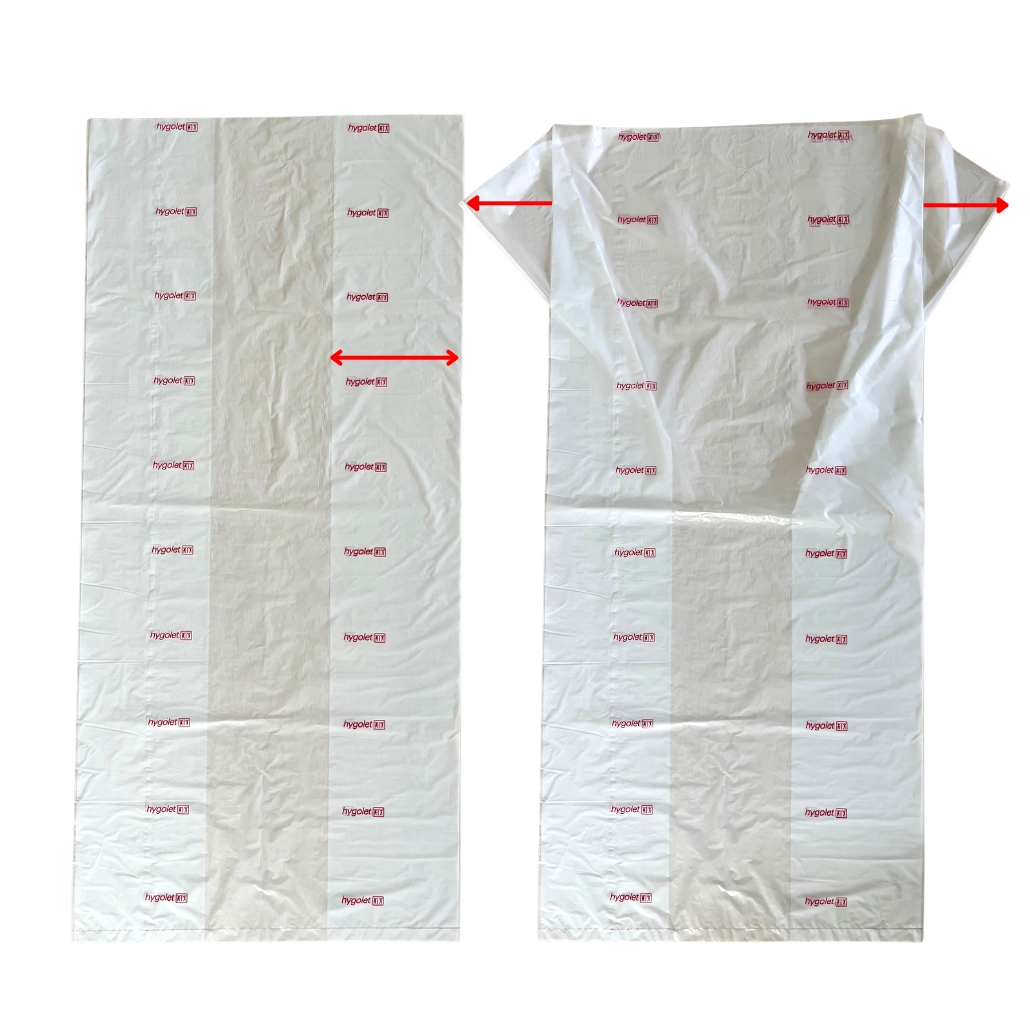
Gusseted bags have extra folds along both long sides, which open up as the bag fills. This makes them far more practical for rectangular bins. They add volume and fit snugly into every corner. A typical 140-litre gusseted bag measures 47 + 43 × 110 cm. The second figure (+43) is the gusset, which only unfolds once you start filling the bag. For rectangular bins in corridors, classrooms or on office floors, this type almost always pays off. Otherwise you lose space in the corners, and with it capacity.
Star seal bags are the third type. Their seams meet in a star pattern at the bottom, so the bag opens into a round shape. This makes them a good fit for smaller round wastebaskets in offices and corridors, which usually collect lighter waste.
How strong does a waste bag need to be?
Alongside size and type, the material decides how much a bag can take. LDPE (low-density polyethylene) is soft and stretchy. It does not tear easily when sharp or angular items end up in the bin, such as bones or broken glass in a restaurant kitchen. Think of the classic black bin bag. HDPE (high-density polyethylene) is thinner and rustles when you handle it. Even so, it is very strong for the little material it uses. It suits dry, light waste such as office paper. The small, thin, see-through liners in office bins belong to this group.
The last criterion is film thickness, measured in microns (µm). At the same thickness, LDPE usually resists punctures better than HDPE. HDPE, on the other hand, uses less plastic and costs less. That makes sense when an office bin only collects light waste. So you cannot compare micron figures between the two materials like for like. What really counts is what the bag will be used for.
| LDPE |
|---|
| Soft and stretchy |
| Classic black bin bag |
| Does not tear easily |
| Industry and catering |
| HDPE |
|---|
| Thinner, rustles |
| Usually see-through |
| Strong for little material |
| Offices and paper waste. Think: Migros Plastic Bag |
Sustainability as a buying criterion
Schools and public bodies often set environmental criteria for cleaning supplies and consumables. Office buildings and industrial firms are also paying more attention to the climate footprint of their suppliers. One widely used label is the German Blue Angel (Blauer Engel). For waste bags, it requires at least 80 per cent recycled plastic from post-consumer waste, as well as strict limits on harmful substances. Some suppliers also offset the CO₂ emissions from making and transporting their bags through recognised climate protection projects.
Waste bags for schools, offices and catering from Hygolet
Hygolet stocks waste bags and bin liners from 18 to 110 litres, in transparent, black or white. They suit the small office bin just as well as larger bins in schools, office buildings or catering. Do you need larger bags for wheelie bins? Or a specific bag type and film thickness for heavy-use areas such as a canteen or workshop? Then it is best to talk to Hygolet’s customer service team before you place a larger order.